

SHELL Study: Project Information
Watch our short animation below to find out more about the SHELL study and how you could get involved!
Read more details about the SHELL study below…
Why are we doing this study?
We know that children start school with a wide range of abilities, which may support or challenge their access to education. Some children may have mild or temporary hearing difficulties that often go unnoticed. In addition, some children in a class may have difficulties with understanding speech even if they can hear it clearly. We want to understand how common these challenges are, and how they might relate to language development, learning to read, and progress at school. To do this we need to gather information about children’s hearing and listening skills from whole classes of children. We are recruiting Year 1 classes at schools in Cambridgeshire and the surrounding areas, to take part in the study.
What does it involve?
Taking part in our study is simple and designed to fit easily into the school day. When our researchers visit your school we will run two different types of sessions that contribute to our study and to children’s education: whole-class science, and individual testing sessions. We are also happy to contribute to other activities such as participating in school assemblies, or providing after-school CPD sessions for teachers and school leaders to share information about our project and give guidance on how to support children in their classes.
Whole-class science sessions:
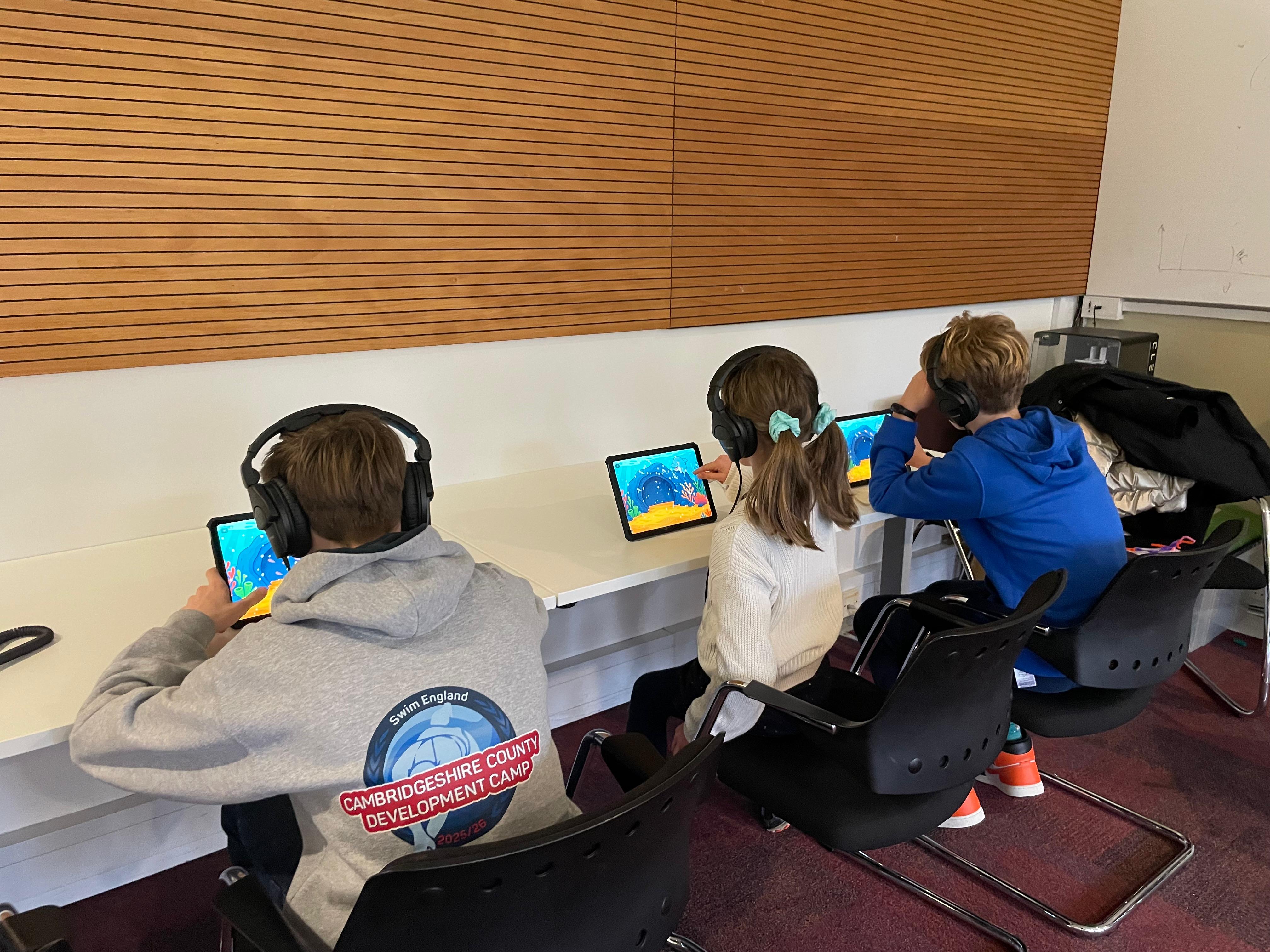
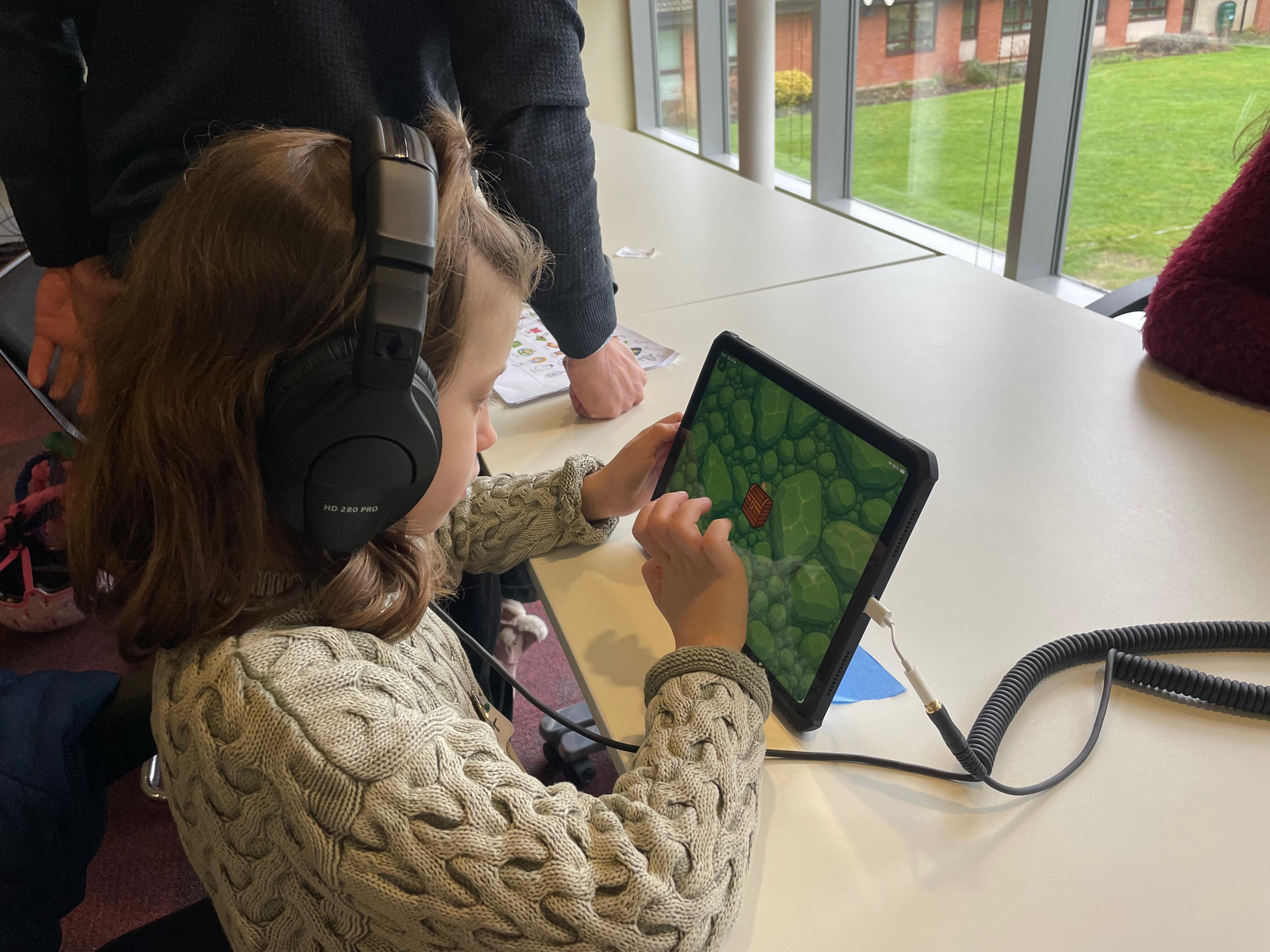
We will come to your school to run a whole day of science engagement activities with each Year 1 class. During these hands-on activities children will learn about their brains and their senses. These activities link to the curriculum (Animals, including humans) and have been co-designed with KS1 teachers to be fun and engaging. Throughout the day, we will also have short sessions with children playing listening games on iPads with headphones. These games are designed to measure four key skills:
1. Hearing sounds:
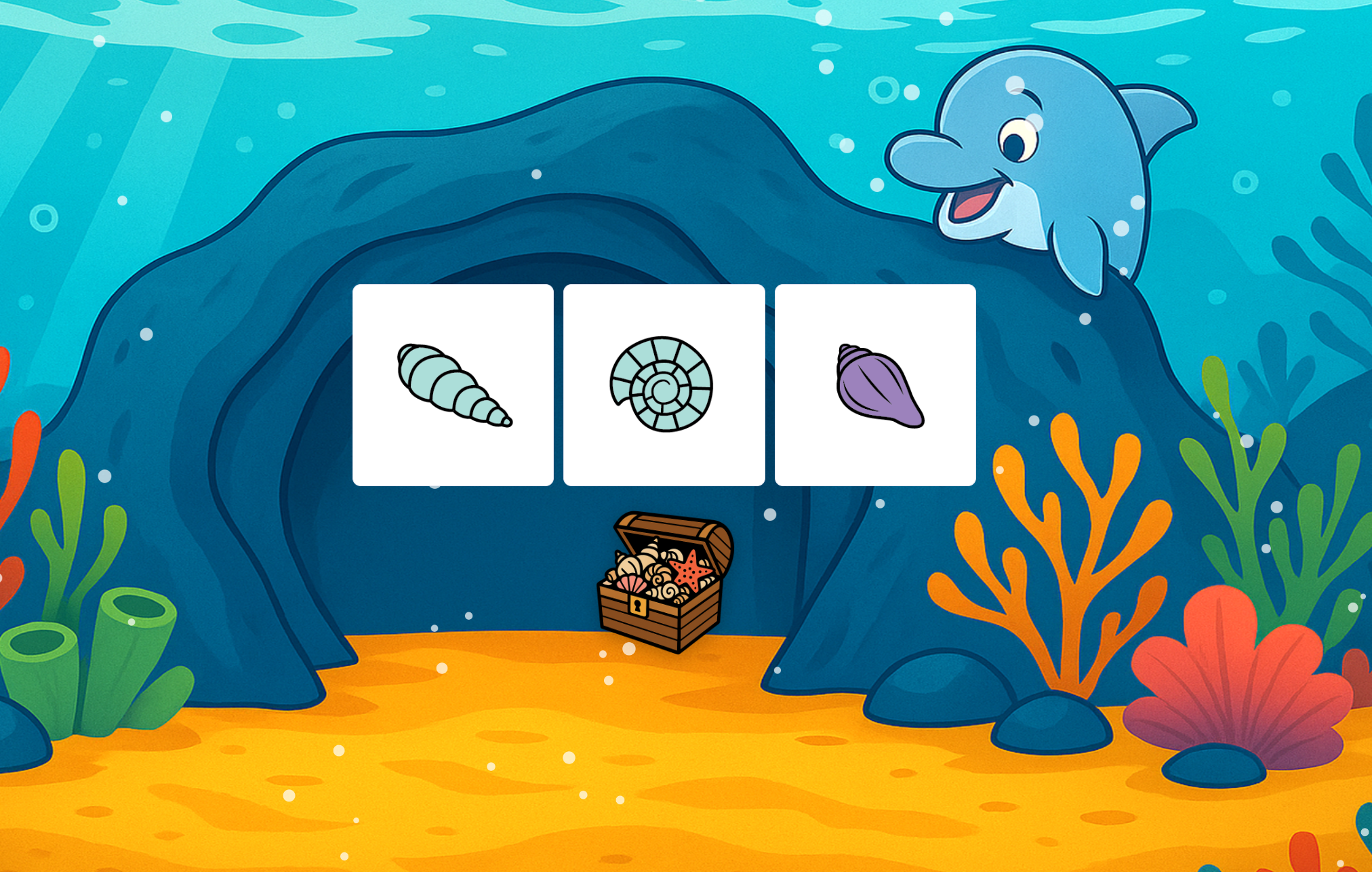
In this game children listen for short beeps as they get quieter and quieter. If they hear a sound they tap on the screen to place shells to decorate a dolphin’s cave.
2. Recognising words:
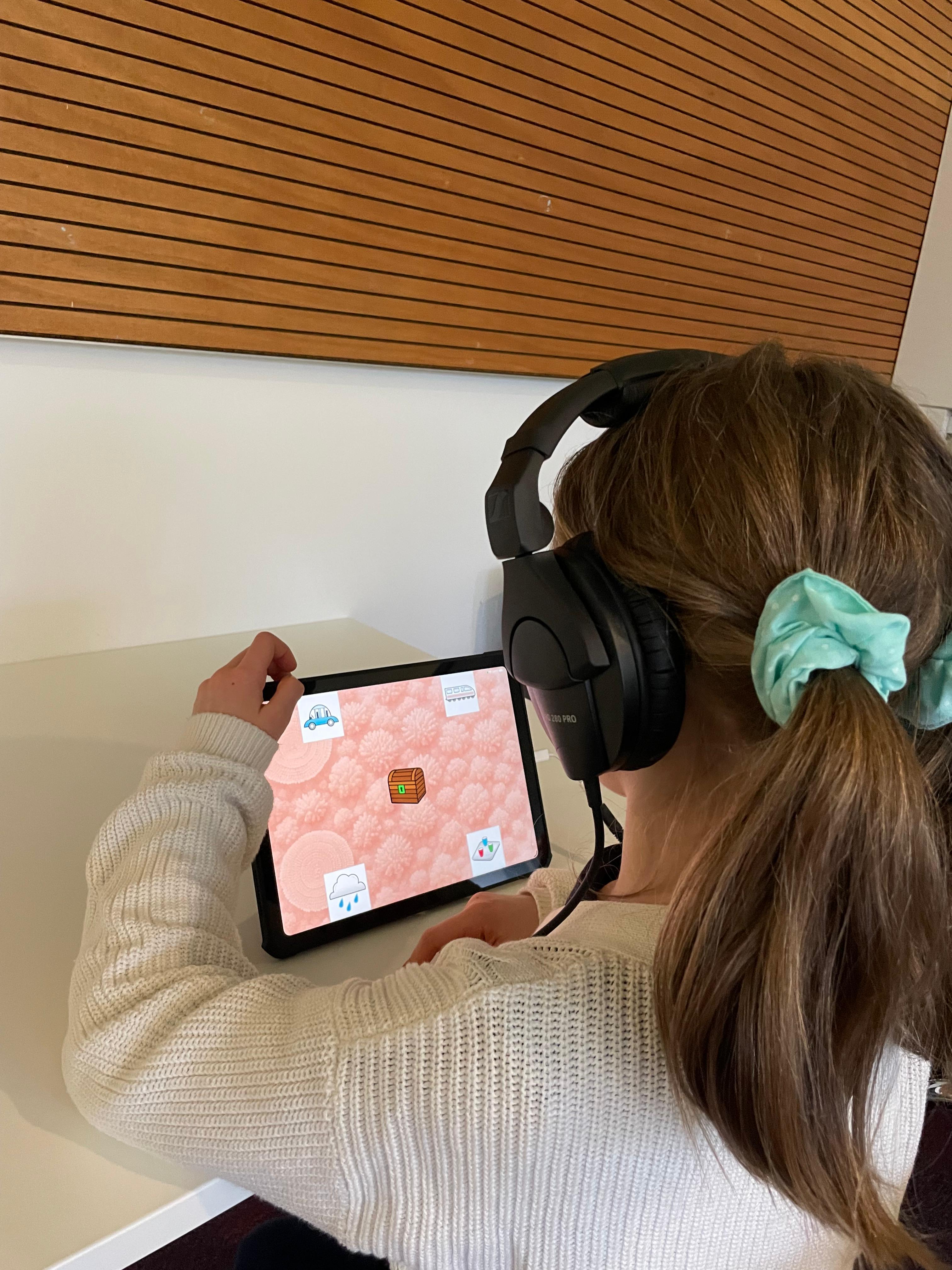
In this game children go to look for more shells by listening for words that tell them which of four cards a shell is hiding under. This game measures the speed and accuracy with which they recognise spoken words and access their meanings. These skills are important for assessing how well children can understand school lessons or keep up with conversations.
3. Looking and listening to speech:
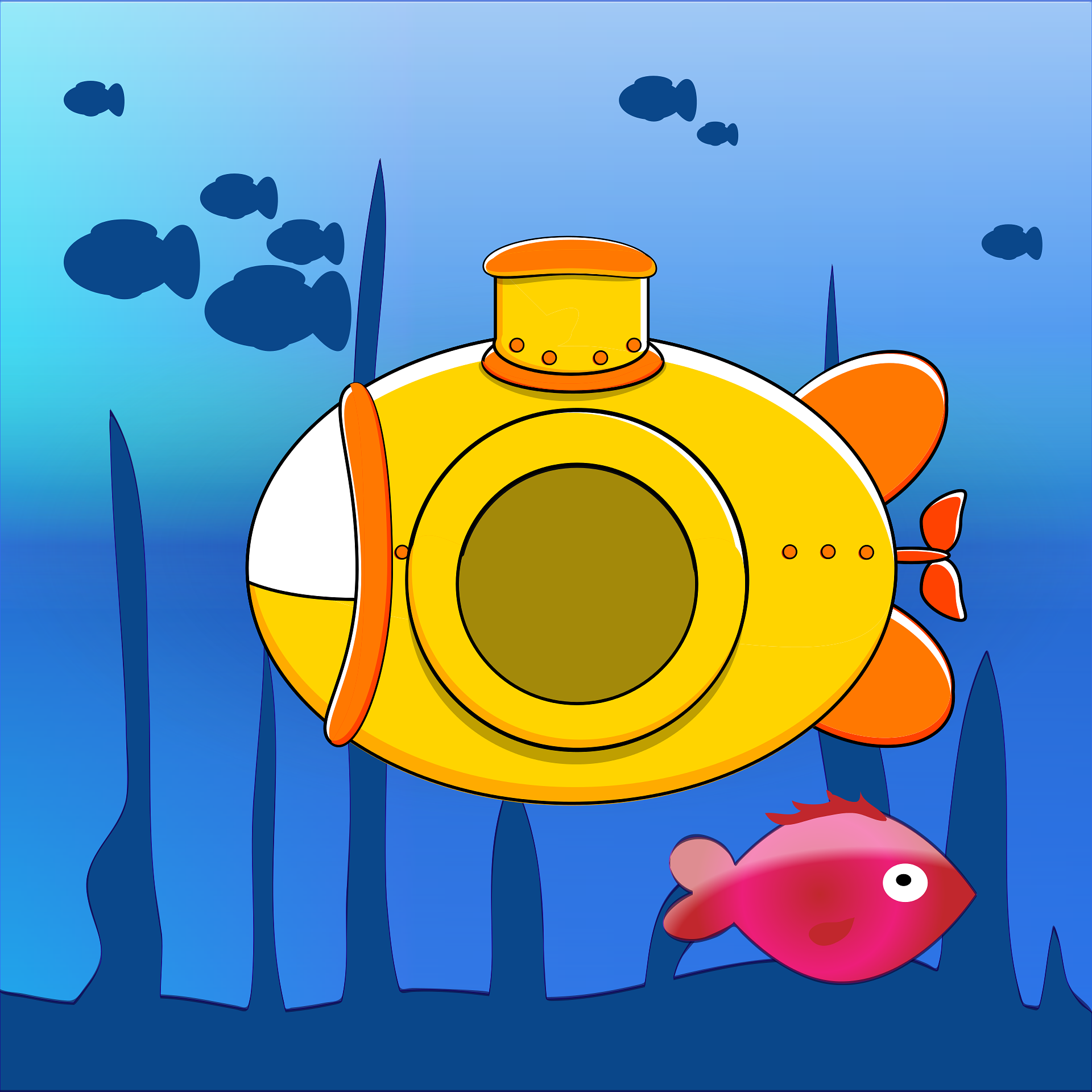
When we listen to someone speaking we also get lots of information from seeing how their lips move. This game measures how well children understand speech in a noisy background when they can see a talking face versus when they can’t. To do this, they watch videos of someone saying words from inside a submarine and select the picture that matches the word that was said.
4. Paying attention:
It is important for us to measure children’s ability to pay attention to these tasks. This helps us to understand if differences in the way they played the other games could be explained by their ability to pay attention and avoid getting distracted. In this game they look out for shapes and tap the screen to respond as quickly as they can to indicate which one they saw.
Individual testing sessions:
On another day in the same week we will take each child out of the class for some short one-to-one tasks to measure other skills. These tasks will take around 30 mins for each child to complete:
1. Language and reading skills:
You may already use the LanguageScreen and ReadingScreen apps with your class. These are short assessments of children’s language and reading skills that children will complete in one-to-one sessions with our researchers. The results of these assessments provide useful information on the language and reading ability of individual children, which we will share with you so that they can guide your classroom teaching. Click on these links to learn more about LanguageScreen and ReadingScreen.
2. Hearing tests:
To verify that our hearing game in the classroom provides an accurate measure we will also complete additional hearing tests in a quiet room at school. This involves three short measures: (i) a test of how sound is transmitted through the middle ear; (ii) a test measuring whether quiet sounds can be heard through headphones (similar to the iPad game) and (iii) a test measuring the tiny echoes produced by the inner ear in response to sounds.
3. Teacher questionnaires:
We will also ask class teachers to complete a questionnaire to give their impression of each child’s behaviour and learning in class. Later in the year, we will also ask them to fill out a form to report the phonics check score for each child. These will help us understand how our measures relate to children’s progress at learning to read.

